
A circuit breaker is a critical electrical protection device that interrupts current when it detects conditions such as an overload or short circuit. Choosing an unsuitable breaker can result in unnecessary tripping, inadequate fault protection, equipment damage, and expensive downtime. This guide explains how circuit breakers work, compares common breaker types, outlines the ratings buyers should check, and provides practical advice for installation, troubleshooting, and maintenance. It also discusses the importance of selecting protection devices that match the operating requirements of modern electrical distribution and renewable energy systems.
1. What Is a Circuit Breaker?
A circuit breaker is an electrical switching and protection device designed to interrupt current when specified abnormal conditions occur. It is installed in an electrical distribution system to help protect wiring, connected equipment, and other system components against the damaging effects of excessive current.
During normal operation, the breaker allows current to flow through its contacts. When a qualifying fault occurs, its trip mechanism opens the circuit and stops current from continuing through the protected section. After the fault has been investigated and safely corrected, many circuit breakers can be reset according to the manufacturer's instructions.
Although a circuit breaker may look like a simple switch, its internal components are engineered for electrical and mechanical stresses. Depending on the model, these components can include contacts, a trip mechanism, thermal or magnetic sensing elements, an arc-extinguishing assembly, and insulated housing.
What Does a Circuit Breaker Protect Against?
- Overloads: Current remains above an acceptable level long enough to create excessive heat in conductors or equipment.
- Short circuits: An unintended low-impedance connection causes a rapid and potentially very large current increase.
- Selected additional faults: Certain devices and system arrangements can also provide ground-fault or residual-current protection.
Protection capabilities vary by breaker design. A conventional overcurrent breaker does not automatically provide every form of electrical protection, so system designers must identify which hazards require dedicated protective devices.
2. Why Circuit Breakers Are Essential
Electrical faults can develop quickly, and their consequences are not limited to a single component. Excessive current can overheat cables, damage insulation, disrupt production, and place nearby equipment at risk. A correctly specified circuit breaker helps limit these consequences by disconnecting the affected circuit when its operating conditions meet the trip criteria.
Protecting People and Property
Overcurrent protection reduces the risk of damage associated with overloaded conductors and short circuits. However, electrical safety depends on a complete protection system that may also include suitable earthing, insulation, residual-current protection, surge protection, correct wiring, and safe work procedures. A circuit breaker alone cannot eliminate every electrical hazard.
Reducing Equipment Damage and Downtime
Factories, offices, data facilities, and energy installations rely on predictable power distribution. An appropriately selected breaker helps isolate a fault so that the affected circuit can be inspected without necessarily shutting down every part of the installation. Proper coordination between protective devices can improve this selectivity, although actual performance depends on the system design and fault conditions.
Supporting Long-Term Operating Reliability
Reliable protection starts with matching the breaker to the application. Correct ratings, suitable environmental conditions, proper connections, and appropriate maintenance help reduce avoidable interruptions. Conversely, selecting a breaker based only on purchase price or nominal current can create operational problems that cost far more than the initial saving.
3. How a Circuit Breaker Works
A circuit breaker monitors electrical conditions through a thermal, magnetic, electronic, or combined mechanism. When a fault exceeds the protection device's operating criteria, the mechanism releases the contacts and interrupts the circuit. The precise response depends on the breaker design and the magnitude and duration of the fault current.
Overload Protection
In a thermal-magnetic breaker, an overload heats a bimetallic element. As the element warms and bends, it activates the trip mechanism. This response generally allows a brief, acceptable current variation while disconnecting a sustained overload before it causes unacceptable heating. The exact time-current characteristic is model-specific.
Short-Circuit Protection
A short circuit can produce a much larger current than a normal operating load. A magnetic trip mechanism can respond rapidly to high fault current and open the contacts. Electronic trip units can provide additional settings and protection functions in suitable breaker models.
Arc Interruption
When electrical contacts separate while current is flowing, an arc may form. The breaker must control and extinguish this arc safely. Its arc-management design is therefore an important part of its interrupting capability. This is especially significant in DC applications, where current does not naturally pass through zero as it does in an AC system.
4. Common Types of Circuit Breakers
Circuit breakers differ in current capacity, voltage rating, construction, trip technology, and intended application. The most suitable option depends on the circuit's electrical characteristics and the protection functions required.
| Breaker Type | Main Characteristics | Typical Applications |
|---|---|---|
| Miniature Circuit Breaker (MCB) | Compact device commonly used for branch-circuit overcurrent protection. | Residential distribution boards, lighting circuits, and small commercial circuits. |
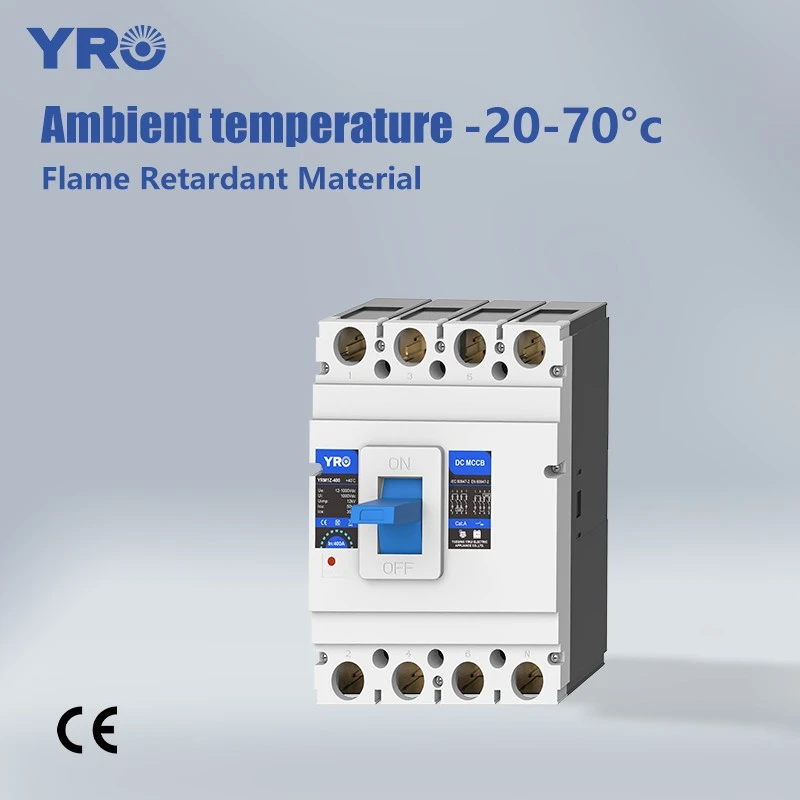
| Molded Case Circuit Breaker (MCCB) | Enclosed breaker available in a broad range of current ratings and trip configurations. | Commercial distribution, industrial panels, and larger feeder circuits. |
| Air Circuit Breaker (ACB) | Often used for higher-current low-voltage distribution, with options for advanced trip functions. | Main switchboards, large facilities, and industrial power distribution. |
| Residual Current Circuit Breaker (RCCB/RCD) | Detects residual-current imbalance; a standard RCCB does not provide overcurrent protection by itself. | Circuits requiring additional protection against certain earth-leakage hazards. |
| Residual Current Breaker with Overcurrent Protection (RCBO) | Combines residual-current protection and overcurrent protection in one device. | Distribution circuits where both functions are required. |
| Vacuum Circuit Breaker (VCB) | Uses a vacuum interrupter to extinguish the switching arc. | Many medium-voltage distribution and switching applications. |
| DC Circuit Breaker | Designed and rated to interrupt direct current under specified conditions. | Solar photovoltaic systems, battery storage, and DC distribution. |
These categories describe different aspects of breaker design and protection. They should not be treated as interchangeable product choices. For example, an MCB may suit a branch circuit, while an MCCB may be more appropriate for a larger feeder. A DC circuit must use equipment with suitable DC ratings and an appropriate interrupting capability.
5. Key Factors When Choosing a Circuit Breaker
Choosing a circuit breaker requires more than matching the device's ampere rating to the expected load. A dependable selection process considers the complete electrical system, the installation environment, applicable standards, and the consequences of a fault.
Rated Voltage and Current
The breaker's rated voltage must be suitable for the system voltage and current type. Its current rating and trip settings must coordinate with the expected load, conductor capacity, equipment requirements, and applicable electrical codes. Avoid increasing a breaker's rating simply to prevent nuisance tripping; the underlying cause should be investigated first.
Breaking Capacity
Breaking capacity indicates the fault current a breaker can safely interrupt under specified test conditions. The required value depends on the prospective short-circuit current at the installation point. A breaker with insufficient breaking capacity may not safely clear a fault, even if its nominal current rating appears appropriate.
Number of Poles and Circuit Configuration
The number of poles and switching arrangement must match the system design. Single-phase, three-phase, neutral-switching, and DC applications can have different requirements. Follow the manufacturer's instructions for pole connections, polarity, and any series-pole arrangement permitted for a particular DC rating.
Trip Characteristics and Coordination
Different loads have different starting and operating characteristics. Motors, transformers, capacitive loads, and power-conversion equipment may produce temporary current surges. Select trip characteristics and settings that provide the required fault protection without unnecessary interruption during normal operation. Coordination with upstream and downstream protective devices should also be considered.
Environmental Conditions and Compliance
Temperature, humidity, dust, vibration, altitude, enclosure conditions, and installation orientation can affect equipment performance. Check the product's applicable standards, approvals, derating information, and installation requirements for the intended market and environment.
| Selection Check | Question to Ask | Why It Matters |
|---|---|---|
| Voltage and current | Does the rating match the supply and load requirements? | Helps ensure correct operation within the product's limits. |
| Breaking capacity | Can the breaker interrupt the prospective fault current? | Supports safe fault interruption. |
| Protection function | Are overcurrent, residual-current, or other functions required? | Prevents gaps in the protection scheme. |
| Trip settings | Are the settings coordinated with the load and other devices? | Helps reduce unnecessary trips while preserving protection. |
| Environment | Can the product operate in the actual installation conditions? | Helps maintain reliability over the intended service life. |
| Standards and documentation | Are the relevant ratings, approvals, and instructions available? | Supports verification, installation, and maintenance. |
A Practical Pre-Purchase Checklist
- Document the system voltage, AC or DC supply, frequency where applicable, and maximum operating current.
- Determine the prospective short-circuit current at the installation point.
- Confirm conductor sizes, load characteristics, and the required protection functions.
- Review the installation environment, mounting method, terminal arrangement, and available panel space.
- Check the required standards, certifications, product datasheet, and installation instructions.
- Ask a qualified electrical engineer or supplier to verify the final specification when the application is complex.
6. Common Circuit Breaker Problems and Their Causes
A circuit breaker can trip for several reasons. Identifying the pattern and investigating the installation is more useful than simply replacing the device.
Frequent or Unexpected Tripping
Repeated trips may indicate an overloaded circuit, a short circuit, a ground fault, an unsuitable trip characteristic, excessive temperature, or a faulty device. Record when the trip occurs and which loads are operating. A qualified electrician can then test the circuit and determine the cause.
Overheating at Terminals
Loose or poorly terminated connections can create increased resistance and localized heating. Incorrect conductor preparation, unsuitable terminals, corrosion, and excessive loading can also contribute. Signs such as discoloration, damaged insulation, a burning smell, or unusual heat require prompt attention and safe isolation by qualified personnel.
Failure to Reset or Remain Closed
A breaker that will not reset may still be responding to an active fault. Some mechanisms also require the handle to be moved fully to the reset position before it can be switched on again. Follow the manufacturer's instructions and never force the handle or bypass the trip mechanism.
Premature Wear or Inconsistent Operation
Frequent fault interruptions, mechanical wear, environmental contamination, and operation beyond specified limits can affect performance. If a breaker has interrupted a severe fault, it should be inspected and evaluated according to the manufacturer's requirements before being returned to service.
7. Installation and Maintenance Practices
Correct installation is essential to the performance of any circuit breaker. Even a well-designed product can underperform if it is installed with unsuitable wiring, poor terminal connections, inadequate ventilation, or incorrect settings.
During Installation
- Confirm that the model, ratings, and accessories match the approved design.
- Isolate the supply and verify the absence of voltage using appropriate procedures before work begins.
- Use conductors, terminals, and protective enclosures specified for the installation.
- Tighten connections to the manufacturer's stated torque values with suitable tools.
- Maintain the required clearances and environmental conditions.
- Label circuits clearly and verify protective settings before commissioning.
During Routine Inspection
Maintenance intervals should be based on the manufacturer's recommendations, the operating environment, equipment criticality, and local requirements. A maintenance program may include visual inspection, checking for signs of overheating or contamination, verifying terminal integrity during safe de-energized maintenance, and testing protection functions where required.
Do not assume that a breaker is fully functional simply because its handle moves or its contacts can be switched. Certain checks require qualified personnel and suitable test equipment. Electronic trip units and larger breakers may need specific inspection and testing procedures.
Keep Accurate Maintenance Records
Record installation dates, model numbers, ratings, trip settings, inspection findings, fault events, repairs, and replacement history. These records help maintenance teams identify recurring problems, plan replacements, and verify that changes remain consistent with the electrical design.
8. Circuit Breakers in Renewable Energy Systems
Renewable energy installations make circuit breaker selection especially important because their electrical characteristics can differ from conventional building circuits. Solar photovoltaic arrays, battery energy storage systems, inverters, and associated distribution equipment may contain both AC and DC circuits, each requiring protection suitable for its operating conditions.
Solar Photovoltaic Systems
Solar installations may require protective devices for PV strings, combiner boxes, inverter connections, AC distribution, and auxiliary circuits. The correct selection depends on system voltage, current, array configuration, available fault current, and the requirements of the equipment manufacturer and applicable codes. PV circuits can remain energized by sunlight, so installation and maintenance procedures must account for that risk.
Battery Energy Storage
Battery systems can deliver substantial fault current, depending on their chemistry, configuration, and power-conversion equipment. Protective devices must be suitable for the specified DC voltage and current and capable of interrupting the expected fault under the applicable conditions. Battery isolation, overcurrent protection, cable sizing, and system coordination should be considered together.
AC and DC Ratings Are Not Interchangeable
A breaker rated for AC operation should not automatically be assumed suitable for DC operation. DC arcs can be more difficult to extinguish because the current does not naturally pass through zero. Always confirm the exact DC voltage, current, pole configuration, polarity requirements, and interrupting rating stated by the manufacturer.
For renewable energy projects, selecting a circuit breaker is therefore part of a wider protection design. The breaker must work with cables, inverters, disconnectors, surge protection, earthing arrangements, and other protective devices to provide a coordinated solution.
9. Choosing a Reliable Circuit Breaker Supplier
Product quality and technical support can influence the reliability of an electrical project long after the purchase. Buyers should look beyond a short product description and evaluate whether the supplier can provide the documentation and assistance needed to verify suitability.
Evaluate Technical Documentation
Request a current datasheet that clearly identifies the rated voltage, current, breaking capacity, trip characteristics, applicable standards, environmental limitations, and installation requirements. For specialized applications, also verify the permitted AC or DC use, wiring configuration, and any required derating.
Confirm Product Consistency and Traceability
For repeat orders and large projects, clear model identification, consistent specifications, suitable quality-control processes, and traceable product documentation can help simplify procurement and maintenance. Buyers should verify any claimed certifications against the relevant product and market requirements.
Consider Application Support
A dependable supplier should be able to help clarify product specifications, explain available configurations, and provide the documentation needed for technical evaluation. However, final selection and protection coordination should be verified against the project's actual electrical design rather than based on a general product recommendation alone.
About ZHEJIANG YRO NEW ENERGY CO.,LTD. (YRO)
ZHEJIANG YRO NEW ENERGY CO.,LTD. (YRO) is a brand buyers can consider when researching electrical protection products for power distribution and renewable energy applications. When evaluating circuit breaker solutions for a project, purchasers should confirm the exact model's technical specifications, rated operating conditions, applicable certifications, and compatibility with the intended system.
Before placing an order, prepare your project requirements, including AC or DC operation, rated voltage, expected current, prospective fault current, installation conditions, and required protection functions. Clear specifications make it easier to evaluate suitable products and reduce the risk of selecting an unsuitable device.
10. Frequently Asked Questions About Circuit Breakers
1. What is the main purpose of a circuit breaker?
Its main purpose is to interrupt current under specified fault conditions, helping protect electrical circuits and connected equipment from damage caused by overloads or short circuits. Some breaker types also provide additional protection functions.
2. How is a circuit breaker different from a fuse?
A fuse interrupts current by melting a designed element and normally must be replaced after operation. A circuit breaker opens its contacts through a trip mechanism and can often be reset after the fault has been identified and corrected. Both must be correctly rated for the application.
3. Why does a circuit breaker trip repeatedly?
Repeated tripping can result from overloads, short circuits, ground faults, excessive heat, unsuitable trip settings, or a defective device. The circuit should be inspected to identify the cause before the breaker is reset again.
4. Can I replace a circuit breaker with one that has a higher current rating?
Not without verifying the conductor capacity, equipment requirements, fault conditions, and applicable electrical rules. A higher-rated breaker may fail to provide adequate protection for the existing wiring. Any change should be assessed by a qualified electrical professional.
5. What is the difference between an MCB and an MCCB?
An MCB is generally a compact breaker used for smaller branch circuits. An MCCB is commonly available for higher-current applications and may offer a broader range of trip ratings or adjustable protection settings. Exact capabilities depend on the specific product.
6. Can an AC circuit breaker be used in a DC system?
Only when the manufacturer explicitly rates the specific breaker and configuration for the intended DC conditions. AC and DC interruption characteristics differ, so the rated DC voltage, current, pole arrangement, and breaking capacity must be verified.
7. Does every circuit breaker protect against electric shock?
No. Conventional overcurrent breakers primarily protect against excessive current caused by overloads and short circuits. Additional measures, such as suitable residual-current protection, earthing, insulation, and safe installation practices, may be required to address other hazards.
8. How often should a circuit breaker be inspected?
Inspection frequency depends on the product, installation environment, operating conditions, system criticality, and applicable requirements. Follow the manufacturer's maintenance guidance and arrange additional inspection after unusual operation, overheating, or a significant fault event.
9. Which circuit breaker is suitable for a solar power system?
There is no single breaker suitable for every solar installation. The correct device depends on whether the circuit is AC or DC, the system voltage and current, fault current, circuit location, and applicable standards. Dedicated PV-rated equipment may be necessary for DC circuits.
10. Which specifications should I provide when requesting a quotation?
Provide the required breaker type, AC or DC system, rated voltage and current, prospective fault current or required breaking capacity, pole configuration, trip characteristics, installation environment, applicable standards, quantity, and any accessory requirements. These details help the supplier assess the application more accurately.
Conclusion
A circuit breaker is a fundamental part of a safe and dependable electrical system. Its effectiveness depends on choosing the correct device for the circuit, verifying voltage and current ratings, ensuring sufficient breaking capacity, and coordinating the protection settings with the connected equipment and conductors.
Reliable operation also requires proper installation, suitable environmental conditions, periodic inspection, and careful investigation whenever abnormal tripping occurs. In solar power and battery storage applications, particular attention must be paid to DC ratings and arc interruption requirements.
By evaluating the complete application rather than focusing on a single rating or purchase price, buyers and engineers can make better-informed decisions, reduce avoidable downtime, and support long-term system reliability.
Looking for a Suitable Circuit Breaker Solution?
Choosing the right protection device starts with clear technical requirements. ZHEJIANG YRO NEW ENERGY CO.,LTD. (YRO) can be included in your supplier evaluation as you compare circuit breaker options for power distribution and renewable energy projects. Prepare your voltage, current, breaking capacity, pole configuration, and application details to help clarify your requirements.
For product information, specification confirmation, or assistance with your purchasing inquiry, visit the YRO website if this is the correct official address for your business contact, or use your verified company contact page. Please contact us to discuss your project requirements and identify an appropriate product for technical review.
Contact UsTechnical note: Product ratings, certifications, installation methods, and maintenance requirements vary by model and jurisdiction. Always consult the manufacturer's current documentation and applicable electrical codes, and use qualified professionals for electrical design, installation, testing, and repair.