

Why Does a Vacuum Circuit Breaker Require Fewer Maintenance Cycles Than an Oil Circuit Breaker
2026-08-19
For decades, oil circuit breakers dominated the medium-voltage switching landscape. Then came the Vacuum Circuit Breaker VCB—a technology that fundamentally changed maintenance schedules in substations and industrial plants. The short answer is physics. But the full explanation involves arc quenching, contact wear, and dielectric recovery. At Toonice, we have witnessed firsthand how switching from oil to vacuum technology reduces annual maintenance hours by over 70% in real-world installations. Let us break down the engineering reasons behind this dramatic difference.
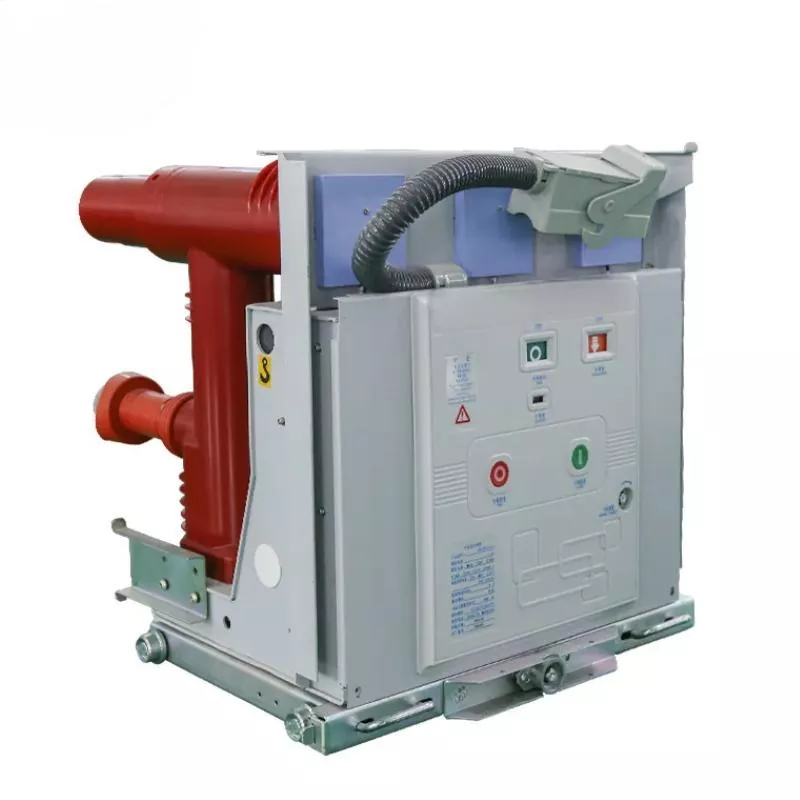
The Core Difference: Arc Interruption Medium
| Parameter | Oil Circuit Breaker | Vacuum Circuit Breaker VCB |
|---|---|---|
| Arc quenching medium | Mineral oil (degrades with each operation) | High vacuum (~10⁻⁶ mbar) – self-renewing |
| Contact erosion rate | High (carbonization & metal vapor) | Extremely low (micrograms per operation) |
| Dielectric strength recovery | Slow (requires oil circulation & cooling) | Instantaneous (within microseconds) |
| Byproducts of interruption | Toxic gases, soot, and water | None – pure metal vapor condenses instantly |
| Recommended maintenance interval | Every 1–2 years or 500 operations | Every 5–8 years or 10,000 operations |
Why Oil Demands Constant Attention
An oil circuit breaker relies on the decomposition of oil to generate hydrogen gas, which blows out the arc. Each interruption:
-
Carbonizes the oil, reducing its dielectric strength.
-
Produces sludge that insulates moving parts and fouls contact surfaces.
-
Requires periodic oil filtration, dielectric testing, and complete oil replacement every 2–3 years.
-
Demands external arc chutes and maintenance of mechanical linkages exposed to corrosive byproducts.
In contrast, a Vacuum Circuit Breaker VCB seals the contacts inside a vacuum bottle. There is no gas to leak, no oil to degrade, and no arc chute to clean. The arc is extinguished when the contacts part, and the metallic vapor plasma condenses back onto the contact surfaces within milliseconds. This means the vacuum itself never ages—only the mechanical mechanism and contact erosion matter.
Quantitative Evidence: Maintenance Man-Hours Compared
| Activity | Oil Breaker (Annual) | Vacuum Circuit Breaker VCB (Annual) | Savings with Toonice VCB |
|---|---|---|---|
| Dielectric oil test | 4 hours | 0 hours | 4 hours |
| Oil filtration/refilling | 6 hours | 0 hours | 6 hours |
| Contact inspection & dressing | 3 hours | 1 hour (visual only) | 2 hours |
| Mechanism lubrication & timing | 2 hours | 2 hours | Same |
| Arc chute cleaning | 3 hours | 0 hours | 3 hours |
| Total per unit per year | 18 hours | 3 hours | 15 hours saved |
For a plant with 50 breakers, that translates to 750 man-hours saved annually—enough to redeploy a full-time technician to more critical tasks. Toonice engineering data shows that over a 20-year lifecycle, the total maintenance cost of a Vacuum Circuit Breaker VCB is roughly one-fifth that of an equivalent oil-type breaker.
Three Critical Factors That Eliminate Frequent Servicing
-
Contact wear is predictable and minimal – In a Vacuum Circuit Breaker VCB, contact erosion is linear and well-documented. The bottle is sealed, so external contaminants never accelerate wear. Oil breakers suffer from unpredictable erosion due to moisture ingress and carbon particle abrasion.
-
No external switching arc – The arc is entirely contained within the vacuum interrupter. This protects surrounding insulation, busbars, and enclosure from thermal stress and tracking. Oil breakers radiate significant heat and deposit conductive carbon on nearby supports, forcing frequent cleaning.
-
Mechanical simplicity – The Vacuum Circuit Breaker VCB uses fewer moving parts. No oil pump, no pressure relief valves, no gas monitoring system. Fewer components mean fewer failure points—and that directly translates to longer intervals between inspections.
Vacuum Circuit Breaker VCB FAQ – Common Questions
Q: Does the vacuum level in a Vacuum Circuit Breaker VCB degrade over time, and how do I know when to replace the interrupter?
A: The vacuum level does not degrade under normal conditions because the bottle is hermetically sealed with a metal bellows that accommodates contact movement. The leakage rate is so low (less than 10⁻⁹ mbar·L/s) that the expected vacuum life exceeds 30 years. However, you should perform a vacuum integrity test using a magnetron or AC high-potential method every 5 years. If the pressure rises above 10⁻² mbar, the interrupter will fail to quench the arc, and you must replace the entire bottle. Toonice recommends exchanging interrupters after 20,000 operations or 15 years, whichever comes first, regardless of visual condition.
Q: Can I retrofit an existing oil circuit breaker panel with a Vacuum Circuit Breaker VCB without changing the entire switchgear?
A: Yes, in most cases. Many manufacturers, including Toonice, offer drop-in retrofit kits that match the existing mounting dimensions, busbar connections, and operating mechanisms of legacy oil-type panels. The retrofit includes a new vacuum interrupter, modern spring-operated actuator, and auxiliary contacts. However, you must verify that the panel's insulation coordination (impulse withstand voltage) and short-circuit rating are compatible. Oil panels often have lower BIL (Basic Impulse Level) ratings—typically 75 kV versus 95 kV for modern VCBs. A site survey by Toonice engineers will confirm fit, form, and function before you commit to the upgrade.
Q: What is the single most common cause of unplanned downtime in a Vacuum Circuit Breaker VCB, and how does it compare to oil breakers?
A: The most common cause in a Vacuum Circuit Breaker VCB is mechanical mechanism failure—specifically, the tripping spring or latch wear—not the vacuum interrupter itself. This accounts for roughly 70% of all VCB faults. In contrast, oil breakers experience a diverse range of failures: oil contamination (40%), contact burning (25%), gasket leaks (20%), and mechanism issues (15%). The key difference is that VCB mechanism failures are predictable—they correlate with operation count and can be managed with simple counter-based lubrication. Oil breaker failures are often sudden and contamination-related, requiring emergency oil changes and dielectric recovery periods that can take up to 24 hours. The Vacuum Circuit Breaker VCB offers superior predictability, which means you can plan maintenance during scheduled outages rather than reacting to emergency shutdowns.
The Bottom Line for Your Operation
Reducing maintenance cycles is not just about saving labor—it is about increasing system availability. Every hour spent on an oil breaker is an hour your feeder is at risk. With a Vacuum Circuit Breaker VCB, you shift from reactive, frequent servicing to condition-based, long-interval checks. Toonice has deployed over 5,000 VCB units across mining, marine, and utility sectors, and our average customer reports a 4x extension in maintenance intervals after conversion.
Ready to Upgrade Your Aging Switchgear?
Do not let outdated oil technology drain your budget and compromise your reliability. Toonice offers site assessments, drop-in VCB replacements, and full lifecycle support tailored to your existing footprint. Our engineering team will calculate your exact ROI and provide a detailed maintenance migration plan.
Contact us today for a free consultation and compare your current maintenance logs against a Vacuum Circuit Breaker VCB simulation—see the difference in hours, costs, and peace of mind. Email [email protected] or visit our website to schedule an on-site evaluation. Your next scheduled outage could be your last oil change. Make it count with Toonice.