

Why Does the Right Disconnect Switch Matter More Than Most Buyers Expect?
2026-04-23
When I evaluate electrical components for a real project, I rarely start with marketing language. I start with risk. I ask how easily a technician can isolate a circuit, how confidently a maintenance team can work around live equipment, and how much trouble a weak component can create after installation. That is why, while looking at the product direction of Zhejiang Hanya Electric Appliance Co., Ltd., I kept coming back to one practical question: how much value can a well-made Disconnect Switch add to system safety, maintenance efficiency, and long-term operating confidence?
In my experience, buyers do not lose time because they fail to find a switch. They lose time because they choose one that looks acceptable on paper but turns into a source of uncertainty in the field. A reliable Disconnect Switch does more than open or isolate a circuit. It helps me create a safer workflow, reduce downtime during inspections, and avoid the hidden cost of unstable performance, difficult installation, or poor product matching. That is the difference between buying a part and making a sound purchasing decision.
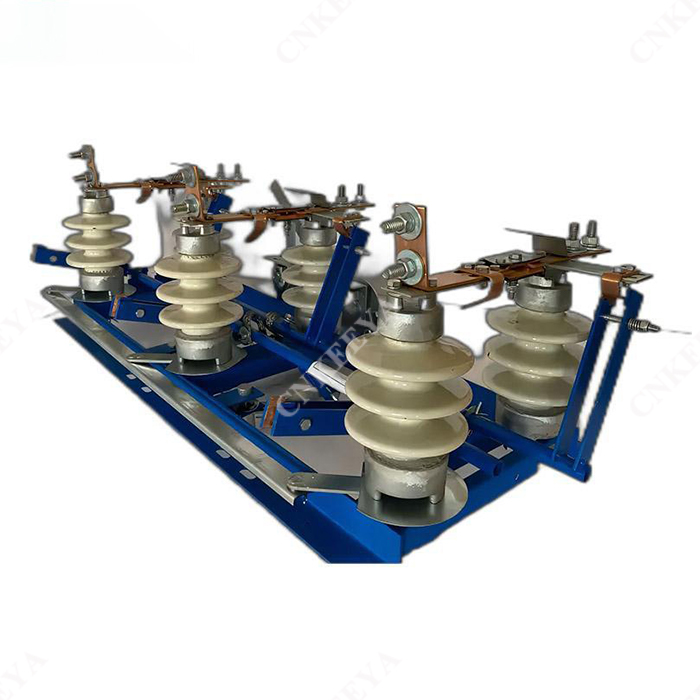
What Problems Do I Usually Face When Buying a Disconnect Switch?
I see the same buying frustrations come up again and again. Some products appear similar at first glance, yet their suitability changes quickly once voltage level, installation environment, operating frequency, and maintenance habits come into the discussion. When I compare options, I am usually trying to avoid the following pain points:
- I do not want unclear specifications that make selection harder instead of easier.
- I do not want a switch that is awkward to install or inconvenient to operate.
- I do not want weak contact reliability that creates future maintenance risks.
- I do not want to discover too late that the product does not fit my distribution setup.
- I do not want to save a little on unit cost and spend much more on service interruptions later.
These are not small issues. In practical purchasing, small mismatches create larger problems after delivery, during assembly, or in the middle of a maintenance shutdown. That is exactly why I treat the selection of a Disconnect Switch as an engineering decision, not just a catalog decision.
How Does a Disconnect Switch Help Me Reduce Risk During Maintenance?
Whenever I review power distribution equipment, I care deeply about safe isolation. Maintenance teams need a clear and dependable way to separate equipment from the power source before inspection, repair, or replacement work begins. If that isolation process feels uncertain, every following task becomes slower, more stressful, and more vulnerable to error.
A dependable Disconnect Switch supports a cleaner maintenance routine. It helps me plan shutdown procedures more confidently, organize service work with less confusion, and reduce avoidable delays caused by questionable switching performance. In other words, I am not only buying a component. I am buying control over how safely my team can work and how efficiently the system can return to service.
That matters even more in facilities where uptime has direct financial consequences. In those cases, reliability is not a decorative selling point. It is part of operational discipline.
Which Details Tell Me a Disconnect Switch Is Built For Real Working Conditions?
When I look beyond the product name, I focus on how the switch is likely to behave in actual use. I do not need grand language. I need sensible design, stable operation, and a configuration that fits the job. The best products usually give me confidence in several areas at once:
- Solid structural design that supports consistent switching action
- Reliable connection and isolation performance over repeated use
- Practical compatibility with the intended distribution environment
- Reasonable adaptability for different installation needs
- Build quality that supports long-term service instead of short-term appearance
If a supplier can address those points clearly, I move forward faster. If the supplier cannot, I slow down, because vague answers around fit, durability, or application usually become expensive later.
| What I Check | Why I Check It | What It Helps Me Avoid |
|---|---|---|
| Operating suitability | I need the switch to match the real working condition, not just a generic description. | Selection errors and premature replacement |
| Mechanical reliability | I want smooth, stable operation during repeated use and maintenance cycles. | Stiff handling, inconsistent isolation, and downtime |
| Installation compatibility | I need the product to fit the layout and practical assembly requirements. | Rework, delays, and unexpected field adjustments |
| Product consistency | I want purchasing confidence across more than one project or batch. | Variable quality and uncertain performance |
| Supplier communication | I need technical responses that are clear enough to support procurement decisions. | Back-and-forth confusion and slower project progress |
Why Do I Care About Product Range Instead Of Looking At Only One Model?
I have learned that a broader product range often makes procurement easier. It gives me more room to match the switch to the actual application instead of forcing the application to adapt to a limited offering. When a supplier works across power distribution and related equipment categories, I usually get a better conversation about fit, system logic, and project requirements, because the product is being considered in context rather than in isolation.
That matters when I am comparing not just one purchase, but a supply relationship. A supplier that understands how a Disconnect Switch fits into wider power equipment use can usually support the decision process more effectively. I spend less time translating basic requirements and more time confirming the right configuration.
How Can Customization Save Me Time Instead Of Complicating The Order?
Some buyers hear the word customization and assume it will slow everything down. I do not see it that way. I see it as a way to reduce mismatch. If my project has specific installation conditions, performance expectations, or layout constraints, a more tailored approach can prevent the kind of purchasing mistake that only becomes visible after delivery.
That is one reason I pay attention when a supplier is positioned not just as a seller, but as a manufacturer capable of addressing different project needs. A properly matched Disconnect Switch can improve installation efficiency, simplify later servicing, and help me avoid the annoying situation where a standard product is technically available but practically inconvenient.
Customization is useful when it solves a real project problem. It is not about making a switch sound special. It is about making it suitable.
What Makes Long Term Value More Important Than A Low Initial Price?
I understand the temptation to compare by price first. Everyone has budgets, approvals, and deadlines. Still, when I buy electrical equipment, I try not to reward the cheapest line item if it increases the total cost of ownership. A lower purchase price can disappear quickly once I factor in installation trouble, service interruptions, maintenance inefficiency, or early replacement.
A dependable Disconnect Switch creates value in quieter ways. It can support smoother maintenance planning, reduce operational hesitation, and lower the chance that the switch itself becomes the weak point in a larger system. Those advantages do not always appear in the quotation sheet, but they show up in how the project performs after handover.
That is why I prefer to compare options with a wider lens. I ask not only what the switch costs today, but also what it may cost me to doubt it tomorrow.
| Buying Approach | What I Gain Quickly | What I May Lose Later |
|---|---|---|
| Choosing mainly by low price | Short-term budget relief | Higher risk of mismatch, weak reliability, and follow-up cost |
| Choosing by suitability and quality balance | Better installation and operating confidence | Usually fewer avoidable problems after delivery |
| Choosing with supplier support and application clarity | Faster technical alignment and smarter procurement | Less wasted time in repeated clarification |
Which Questions Should I Ask Before I Send An Inquiry?
Before I request a quotation, I try to organize the details that actually matter. This makes supplier communication faster and gives me a better chance of receiving a useful recommendation. If I were preparing an inquiry for a Disconnect Switch, I would usually confirm these points first:
- What is the intended installation environment?
- What operating conditions should the switch handle?
- How often will the switch be operated or serviced?
- Do I need a standard configuration or a project-specific solution?
- What matters more for this order, lowest price, fastest lead time, or longer service confidence?
When I provide clear information early, I usually receive clearer answers in return. That is how I reduce uncertainty before the purchase order is even issued.
Why Do Better Suppliers Make The Buying Process Feel Simpler?
I have no patience for technical communication that creates more confusion than clarity. Good suppliers help me move from problem to solution with less friction. They understand that buyers are not looking for decorative wording. We are looking for answers that make selection easier, comparison more honest, and project planning more stable.
That is why the right supplier relationship can be just as important as the product itself. When I can discuss application, installation logic, and product fit with someone who understands the bigger picture, buying a Disconnect Switch becomes a cleaner process. I spend less time guessing and more time deciding.
How Do I Know When I Am Ready To Choose The Right Disconnect Switch?
I know I am ready when I stop asking which product sounds impressive and start asking which product actually fits the work. At that point, the decision becomes clearer. I can compare not only price, but also reliability, ease of use, long-term value, and supplier responsiveness. That is the standard I use when I evaluate electrical components for practical projects, and it is the same standard I would apply here.
If I need a solution that supports safer isolation, more efficient maintenance, and a more confident purchasing process, I do not treat the Disconnect Switch as a minor accessory. I treat it as a key part of system dependability.
Is This The Right Time To Contact Us?
If you are comparing options for your next project and want a supplier discussion grounded in application, quality, and purchasing practicality, this is the right moment to move forward. Whether you are narrowing down specifications, reviewing installation requirements, or trying to find a more suitable Disconnect Switch for your power distribution needs, contact us for product details, technical support, and a quotation built around your actual project requirements. A clear inquiry today can save a great deal of uncertainty later.