

Why Is the JR28 Thermal Overload Relay Essential for Reliable Motor Protection?
2026-10-29
Electric motors are essential components in industrial production, powering pumps, compressors, fans, conveyors, and automated machinery. However, prolonged overloads, phase failures, and abnormal operating conditions can increase motor temperature and cause unexpected equipment downtime. The JR28 Thermal Overload Relay provides an effective solution for protecting AC motors against thermal overload and related electrical faults. For businesses seeking dependable motor protection and improved operational efficiency, selecting a suitable relay is an important step toward maintaining stable production.
Shanghai DaDa Electric Co., Ltd. offers electrical protection products designed to meet the practical needs of industrial control systems. Understanding the functions and benefits of the JR28 series helps buyers identify a suitable solution for their equipment and operating environment.
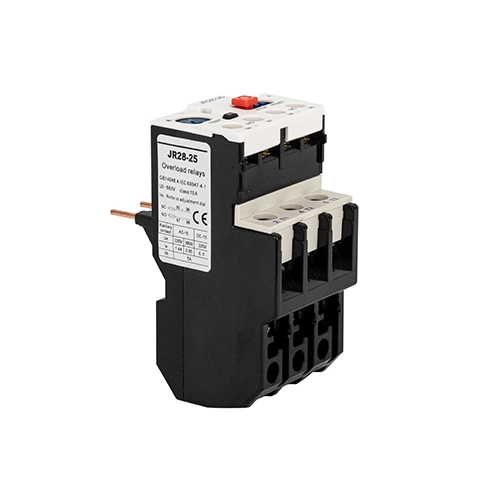
What Does a JR28 Thermal Overload Relay Do?
A JR28 Thermal Overload Relay is an electromechanical protection device commonly used with AC contactors in motor control circuits. It detects excessive current over time through a thermal mechanism and triggers the control circuit to disconnect the motor when an overload condition occurs.
Unlike a circuit breaker designed to protect against short circuits and other electrical faults, a thermal overload relay primarily addresses sustained overcurrent conditions that can lead to overheating. It is therefore an important component of a coordinated motor protection system.
Depending on the model, the JR28 series may provide overload protection, phase-failure protection, temperature compensation, adjustable current settings, and manual or automatic reset options.
Why Is Overload Protection Important for Industrial Equipment?
Motor overload can result from excessive mechanical loads, blocked machinery, frequent starting, or abnormal operating conditions. Without appropriate protection, prolonged overheating may damage winding insulation, shorten motor service life, and increase maintenance costs.
The JR28 Thermal Overload Relay helps businesses manage these risks in several ways:
-
Reduced motor damage: Trips the control circuit when a sustained overload reaches the relay's operating threshold.
-
Improved operational safety: Helps limit the consequences of abnormal motor current.
-
Lower maintenance expenses: Supports preventive maintenance by reducing the likelihood of overload-related failures.
-
More stable production: Helps reduce unexpected equipment interruptions.
-
Simplified troubleshooting: A trip indicator and test function, where provided, can assist maintenance personnel in checking the protection system.
These benefits depend on correct product selection, installation, and coordination with other protective devices.
How Does the JR28 Thermal Overload Relay Work?
The relay typically uses a bimetallic thermal mechanism. When excessive current flows through its sensing elements, heat causes the bimetallic components to bend. Once the operating threshold is reached, the relay changes the state of its auxiliary contacts, allowing the contactor control circuit to interrupt motor operation.
The basic protection process includes:
-
Current monitoring: The relay responds to the current flowing through the motor circuit.
-
Thermal response: Sustained excessive current generates heat within the sensing mechanism.
-
Trip activation: The relay operates when the applicable trip characteristics are reached.
-
Circuit interruption: The contactor opens to disconnect the motor.
-
Reset and inspection: After the fault has been identified and corrected, the relay can be reset according to the selected operating mode.
A thermal overload relay is not a substitute for short-circuit protection. Appropriate fuses or circuit breakers must also be selected for the complete electrical system.
Key Features to Consider When Selecting a JR28 Relay
Different JR28 models may offer different current settings, mounting arrangements, and contactor compatibility. Buyers should confirm the actual product specifications before ordering.
| Feature | Function or Benefit |
|---|---|
| Adjustable current setting | Allows protection settings to match the motor's rated current within the model's specified range |
| Phase-failure protection | Helps protect three-phase motors against certain phase-loss conditions |
| Temperature compensation | Helps maintain more consistent operation as ambient temperature changes |
| Manual or automatic reset | Provides flexibility for different control and maintenance requirements |
| Trip indicator | Helps maintenance personnel identify a tripped relay |
| Test and stop buttons | Support operational checking and control, depending on the model |
| Auxiliary contacts | Enable integration with contactor control circuits and signaling systems |
For example, certain JR28 variants are available with rated insulation voltage up to 690 V and model-dependent current ranges. These figures should not be treated as universal specifications for every JR28 product.
Where Can the JR28 Thermal Overload Relay Be Used?
The JR28 series is suitable for a range of industrial motor-control applications when the electrical ratings and protection characteristics match the equipment requirements.
Common applications include:
-
Water pumps: Helps protect motors operating in water supply, drainage, and wastewater systems.
-
Industrial fans: Supports reliable operation in ventilation and air-handling equipment.
-
Air compressors: Helps reduce the risk of sustained motor overload.
-
Conveyor systems: Provides thermal protection for motors used in material handling.
-
Manufacturing machinery: Supports motor protection in production lines and automated equipment.
For demanding applications, engineers should also consider starting frequency, load characteristics, ambient temperature, and the required protection coordination.
How Can Buyers Choose the Right Model?
Before purchasing a JR28 Thermal Overload Relay, review the following points:
-
Motor rated current: Select a model whose adjustment range accommodates the motor's rated current.
-
Contactor compatibility: Confirm that the relay matches the contactor model and mounting arrangement.
-
Protection requirements: Determine whether phase-failure protection and other available functions are needed.
-
Reset preference: Choose manual or automatic reset according to the control strategy and safety requirements.
-
Operating environment: Verify the permitted ambient temperature and installation conditions.
-
Compliance and documentation: Request the applicable technical datasheet, wiring information, and relevant conformity documentation.
Correct selection is essential. An unsuitable current setting or incompatible installation can compromise protection performance.
Why Work with Shanghai DaDa Electric Co., Ltd.?
When sourcing electrical protection components, industrial buyers need more than a product name. They also need clear specifications, compatibility information, and dependable communication throughout the purchasing process.
Shanghai DaDa Electric Co., Ltd. can be considered by buyers seeking JR28 Thermal Overload Relay solutions for motor control applications. Before placing a bulk order, buyers should confirm model availability, technical parameters, applicable standards, delivery arrangements, and any required customization or OEM services directly with the supplier.
A well-matched thermal overload relay can contribute to better equipment protection, more predictable maintenance, and more reliable industrial operations.
Conclusion
The JR28 Thermal Overload Relay plays an important role in protecting AC motors from sustained overload and, in supported models, phase-failure conditions. By combining appropriate current settings, suitable contactor compatibility, and correct installation, businesses can build a more dependable motor protection system.
Looking for a suitable motor protection solution for your equipment? Contact us at Shanghai DaDa Electric Co., Ltd. to discuss your application requirements, confirm product specifications, and identify the right JR28 Thermal Overload Relay for your project.