

Why Should I Choose a European Type Substation When Space, Safety, and Project Deadlines All Matter?
2026-05-14
When I look at power distribution projects for industrial parks, commercial buildings, residential communities, renewable energy sites, or urban infrastructure, I rarely see buyers asking for a substation only because it “looks compact.” What they really want is a power solution that can be delivered faster, installed with fewer site complications, maintained more easily, and trusted for years under real operating pressure. That is why I have been paying closer attention to Lugao Power Co.,Ltd and its European Type Substation, because this product category answers a very practical question many project owners face today: how can I build a safer and more reliable distribution system without turning the construction site into a long, costly electrical engineering headache?
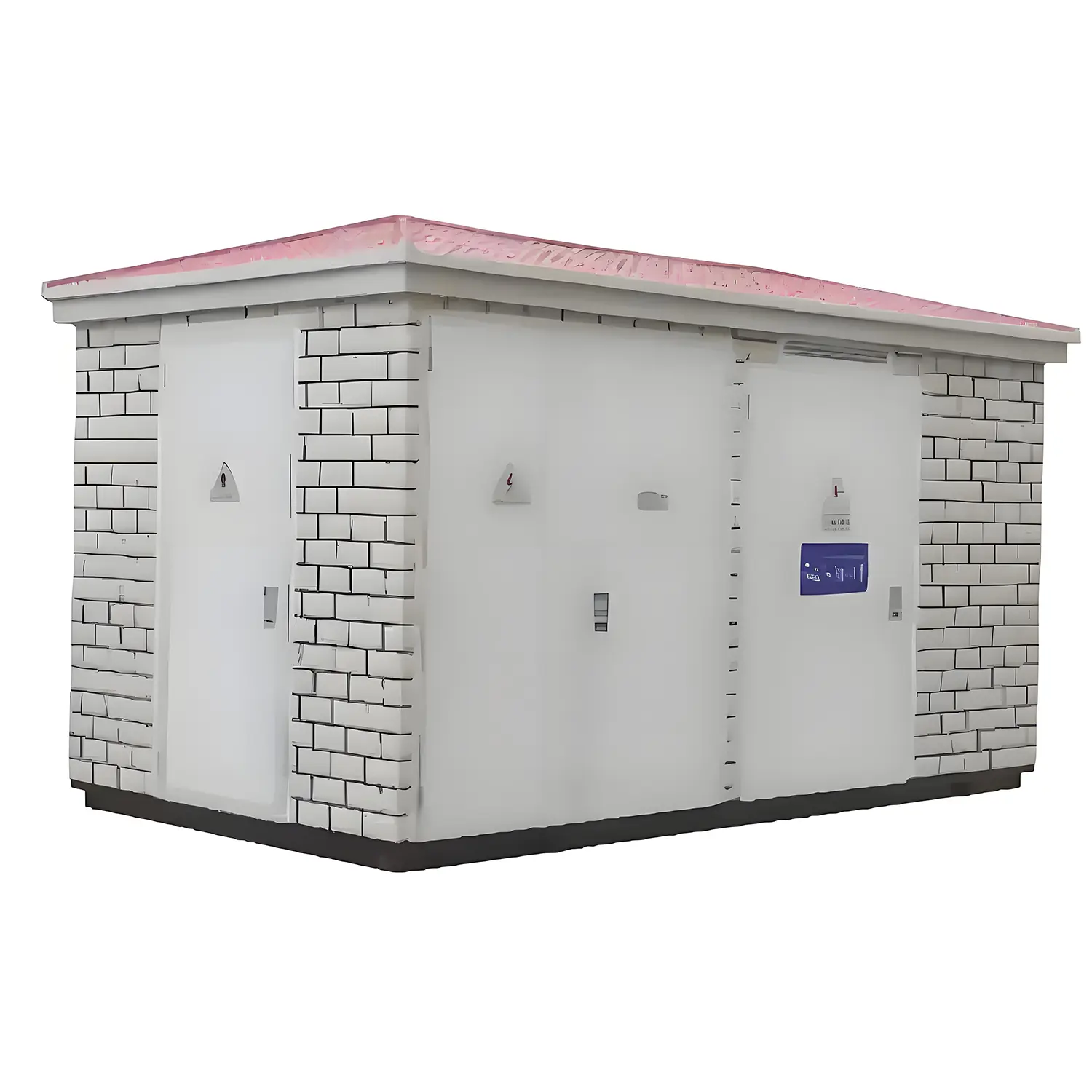
A European Type Substation is not just a metal box with electrical equipment inside. In my view, it is a complete prefabricated power distribution unit that brings together high-voltage equipment, transformer systems, low-voltage distribution, protection devices, monitoring options, and an outdoor enclosure into one coordinated structure. For buyers, this matters because power distribution decisions are never isolated. One weak point in layout, insulation, heat dissipation, enclosure design, or maintenance access can affect the entire project schedule and long-term operating cost.
In this article, I want to explain why I would consider this solution for projects where safety, land use, installation speed, visual appearance, and long-term reliability all need to be balanced carefully.
What Makes A European Type Substation Useful For Modern Power Distribution Projects?
When I evaluate a substation for a real project, I usually start with one question: will this equipment make the site easier to build and easier to manage later? A European Type Substation performs well in this area because it is designed as an integrated system rather than a collection of separate components installed one by one at the project site.
For developers, contractors, and electrical engineers, this integrated structure can reduce many familiar problems. Instead of separately arranging civil works, transformer placement, switchgear layout, weather protection, cable connection space, and maintenance zones, the project team receives a factory-assembled solution with a more predictable structure.
- I can reduce the amount of on-site assembly work.
- I can simplify the connection between high-voltage and low-voltage systems.
- I can keep the transformer, switchgear, and control sections better organized.
- I can shorten the time between equipment arrival and commissioning.
- I can make future inspection and maintenance easier for the operator.
This is especially valuable in urban and industrial projects where delays are expensive. A delayed power distribution system can slow down building handover, factory production, charging station operation, solar project connection, or public infrastructure launch. In those situations, a compact and prefabricated substation is not just convenient. It protects the project timeline.
Why Does The European Design Approach Matter For Safety And Maintenance?
The European-style approach focuses on compartmentalized design, practical internal spacing, easier access, and strong protection around the main electrical sections. I like this because electrical safety is not only about passing a single test. It is also about how the equipment behaves during years of operation, maintenance, heat changes, weather exposure, and load fluctuation.
A European Type Substation usually separates the high-voltage room, transformer room, and low-voltage room. This layout gives each section its own working space and reduces unnecessary interference between different electrical functions. For maintenance staff, that separation can make routine inspection more direct and less stressful.
| Buyer Concern | How A European Type Substation Helps | Why It Matters In Real Projects |
|---|---|---|
| Limited installation space | Integrated structure combines key electrical sections in one enclosure | Useful for urban sites, factories, communities, and commercial areas |
| Long construction period | Prefabricated design reduces on-site installation work | Helps contractors keep project schedules under control |
| Safety during operation | Separated compartments and protection systems improve operation management | Reduces risks for maintenance personnel and nearby facilities |
| Outdoor environment | Weather-resistant enclosure protects internal electrical components | Suitable for outdoor power distribution applications |
| Future maintenance | Clear internal layout improves inspection and servicing access | Helps lower long-term operation pressure |
For me, the biggest advantage is not only that the substation is compact. It is that the compactness does not remove the need for service access, ventilation, and safe internal separation. Some equipment looks small on paper but becomes difficult to maintain after installation. A well-designed European Type Substation avoids that trap by keeping the structure compact while still respecting practical engineering needs.
How Can A European Type Substation Solve Common Buyer Pain Points?
Most buyers I meet do not begin with technical excitement. They begin with pressure. The project has a deadline. The site has limited land. The budget has already been reviewed too many times. The owner wants reliable power, but the contractor wants faster installation. The maintenance team wants enough working space, while the architect may care about how the equipment looks beside buildings or public areas.
This is where a European Type Substation becomes attractive. It offers a balanced answer instead of forcing the buyer to choose only one priority.
- For industrial parks, I would value the stable distribution capacity and easier maintenance arrangement.
- For residential communities, I would care about safety, noise control, enclosure appearance, and long-term operation.
- For commercial complexes, I would look at compact layout, reliable protection, and minimal disruption during installation.
- For renewable energy projects, I would focus on outdoor suitability, flexible configuration, and efficient grid connection.
- For municipal infrastructure, I would consider durability, easy operation, and protection against environmental exposure.
A substation purchase is rarely just a product purchase. It is a risk decision. Buyers need to know whether the system can fit the site, match the required voltage and capacity, meet safety expectations, and support future service work. A European-style box-type solution helps reduce uncertainty because much of the system is planned and assembled before it reaches the site.
Which Technical Features Should I Check Before Choosing This Substation?
When I choose a European Type Substation, I would never make the decision only from a product photo. The enclosure may look clean, but the real value is inside the design, testing, configuration, and manufacturing control. I would pay attention to several technical points before making a purchase decision.
| Selection Point | What I Would Check | Practical Benefit |
|---|---|---|
| Transformer option | Dry-type or oil-immersed transformer based on site safety and load needs | Helps match the substation to indoor, outdoor, public, or industrial use |
| High-voltage equipment | Switchgear type, protection method, rated voltage, and short-circuit withstand ability | Supports safer power receiving and distribution |
| Low-voltage distribution | Outgoing circuits, control method, metering, and protection layout | Makes the system easier to operate and expand |
| Enclosure material | Steel structure, surface treatment, corrosion resistance, and protection level | Improves outdoor durability and service life |
| Heat dissipation | Ventilation path, internal spacing, transformer heat management, and climate conditions | Reduces overheating risk during long-term operation |
| Customization | Voltage, capacity, layout, cable entry, monitoring, and project-specific design | Helps the buyer avoid forced-fit equipment selection |
I also prefer a supplier that can discuss technical details instead of only sending a price sheet. For electrical equipment, the cheapest offer can become expensive if it causes redesign, installation delay, overheating, unsuitable protection, or repeated maintenance. A serious manufacturer should help the buyer match the substation to the project environment, not simply push a standard model.
Is A European Type Substation Better For Outdoor And Public-Facing Projects?
For many outdoor projects, I would say yes, especially when the project needs a balance between protection, appearance, and accessibility. A European Type Substation is often used where the substation may be close to people, buildings, roads, or production areas. That means the enclosure cannot be treated as an afterthought.
The outer structure should protect internal components from dust, rain, temperature changes, and accidental contact. At the same time, it should allow proper heat release and convenient maintenance access. In public-facing areas, appearance also matters. A rough or poorly arranged substation can look out of place near residential communities, commercial buildings, and municipal sites.
From a buyer’s perspective, I would consider this product when the project needs the following qualities:
- A compact footprint without losing practical internal maintenance space.
- A clean enclosure that can blend better into built environments.
- Outdoor protection for transformer and distribution equipment.
- Flexible arrangement for different voltage and capacity requirements.
- Lower site construction complexity compared with traditional separate installations.
This is one reason I see the European Type Substation as more than a utility product. It is also a project coordination tool. It helps electrical design, civil construction, and site management move in the same direction.
How Do Dry-Type And Oil-Immersed Transformer Options Affect My Decision?
One detail buyers should not ignore is the transformer choice. In a European-style compact substation, both dry-type and oil-immersed transformer options may be considered depending on the project. I would not say one is always better than the other. The better choice depends on the installation environment, fire safety requirements, capacity demand, maintenance plan, and operating conditions.
| Transformer Type | Where I Would Consider It | Main Advantage | Point To Review |
|---|---|---|---|
| Dry-Type Transformer | Residential areas, commercial buildings, public spaces, and safety-sensitive sites | Oil-free structure and lower fire-related concern | Capacity and cooling conditions should be matched carefully |
| Oil-Immersed Transformer | Industrial sites, outdoor projects, and higher-load applications | Strong load capacity and proven long-term use | Oil containment and maintenance inspection should be considered |
For example, if I were selecting a substation for a public commercial area, I might prefer a dry-type configuration because fire safety and environmental perception are important. If I were working on an industrial outdoor project with heavier load requirements, an oil-immersed transformer might be more suitable. The key is not to copy another project’s choice. The key is to select the configuration that fits the actual site.
Why Would I Consider Lugao Power Co.,Ltd For This Product?
When choosing a supplier, I care about three things: whether the company understands electrical system integration, whether it can provide practical customization, and whether it treats testing and quality control as part of the product rather than an optional selling point. Lugao Power Co.,Ltd positions its substation solutions around prefabricated power distribution, transformer integration, switchgear coordination, and project-based configuration, which are all relevant to buyers who need more than a standard catalogue item.
For a European Type Substation, customization is especially important. Every project may have different voltage levels, transformer capacity, cable entry direction, protection requirements, enclosure preferences, operating environment, and space limitations. A supplier that can adapt the design helps reduce the risk of mismatch after the equipment arrives on site.
I would also look at the manufacturer’s ability to support the buyer before and after ordering. A good substation supplier should be able to help with technical discussion, configuration selection, quotation preparation, production communication, and shipment coordination. For international buyers, this support can be just as important as the product itself because unclear communication often causes costly delays.
How Can This Substation Help Lower Long-Term Operating Pressure?
Many buyers focus heavily on the purchase price, and I understand why. Budgets matter. But with power distribution equipment, the real cost continues after installation. If the layout is hard to maintain, if heat dissipation is weak, if the enclosure is not durable enough, or if components are difficult to inspect, the project owner may face repeated service interruptions and higher maintenance pressure.
A well-configured European Type Substation can help control those long-term risks through a more organized internal structure and more practical enclosure design. I would expect the right solution to support stable operation in several ways.
- Better compartment separation makes inspection clearer.
- Factory-integrated assembly reduces random on-site wiring and layout problems.
- Suitable transformer selection helps manage load and temperature conditions.
- Weather-resistant enclosure design protects electrical equipment outdoors.
- Custom low-voltage distribution options make operation more convenient.
- Monitoring and protection options can improve system management.
In short, I would not choose this type of substation only because it saves space. I would choose it because it can make the whole power distribution system easier to build, easier to operate, and easier to maintain.
What Should I Prepare Before Requesting A Quotation?
If I wanted a serious quotation for a European Type Substation, I would prepare the basic project information first. This helps the manufacturer recommend the right configuration and avoids vague pricing that may change later.
| Information To Prepare | Why It Helps |
|---|---|
| Rated voltage on high-voltage and low-voltage sides | Allows the supplier to select matching switchgear and transformer design |
| Transformer capacity | Helps determine load suitability and equipment size |
| Application site | Industrial, commercial, residential, renewable energy, or municipal use may require different configurations |
| Installation environment | Temperature, humidity, altitude, corrosion risk, and outdoor exposure can affect design |
| Cable entry and outgoing circuit requirements | Helps plan the internal layout and connection method |
| Preferred transformer type | Dry-type or oil-immersed options should match safety and operating needs |
| Project schedule | Helps coordinate production, delivery, and installation planning |
How Do I Know If This Is The Right Choice For My Project?
I would consider a European Type Substation if my project needs reliable power distribution in a compact, organized, and outdoor-ready format. It is especially suitable when the project owner wants to reduce on-site construction work, improve safety management, and keep future maintenance practical.
It may be the right choice if I am dealing with one or more of these situations:
- The project site has limited available space for electrical rooms or separate equipment.
- The construction schedule is tight and prefabricated delivery would save time.
- The substation must be installed outdoors or near public-facing areas.
- The buyer needs a cleaner and more organized distribution system.
- The maintenance team wants safer access and clearer compartment separation.
- The project requires flexible voltage, capacity, and layout options.
Of course, the final choice should always match the actual engineering requirements. I would review the load, voltage, installation environment, local standards, safety expectations, and maintenance plan before confirming the design. But for many modern projects, this type of substation offers a strong balance of practicality and long-term value.
Why Should I Send An Inquiry Before Finalizing The Design?
Power distribution equipment should never be selected by guesswork. A drawing, a capacity requirement, or a site photo can change the recommended configuration. That is why I would rather contact the supplier early, discuss the project details, and confirm whether the proposed European Type Substation can meet the required voltage, load, enclosure, transformer, and delivery needs.
If you are planning a power distribution project and need a compact, safe, and customizable substation solution, Lugao Power Co.,Ltd can help review your requirements and provide a suitable technical proposal. Share your voltage level, transformer capacity, application site, and project schedule, then contact us to receive a tailored quotation. For a reliable European Type Substation solution that fits your real project conditions, leave an inquiry today or contact us for professional support.