

Why Should Rated Voltage Be Considered When Choosing an Outdoor Disconnect Switch?
2026-11-17
Rated voltage is one of the first specifications engineers should check when selecting an Outdoor Disconnect Switch for a substation or power distribution project. It determines whether the equipment is designed for the electrical stress expected at its installation point. Choosing a rating based only on the network's nominal voltage can lead to an unsuitable insulation level, reduced operating margins or difficulties during project approval. The correct selection must consider the system's highest operating voltage, insulation coordination, transient overvoltages and actual site conditions.
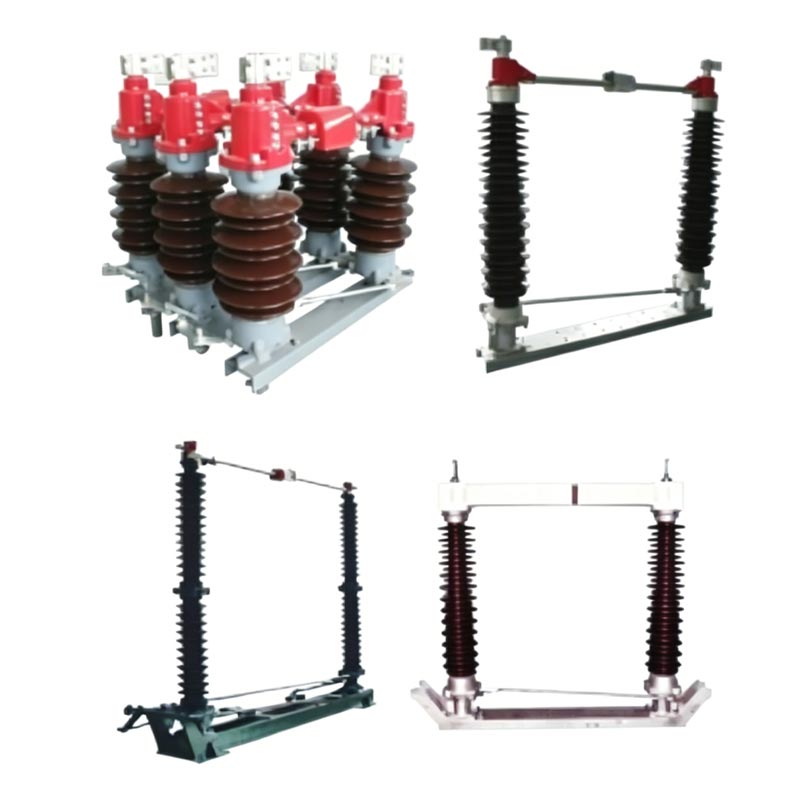
For high-voltage applications, Zhejiang Usune Electric Co., Ltd. offers GW4 and GW5 outdoor disconnect switch series with published voltage options covering 12 kV, 24 kV, 35 kV, 72 kV, 110 kV, 126 kV, 145 kV and 170 kV. These options provide flexibility for different substation and transmission network requirements, but the rating of an individual model must always be checked against the project specification. Understanding how rated voltage relates to insulation performance and operating conditions helps engineers, EPC contractors and procurement teams avoid costly equipment mismatches.
What Does Rated Voltage Mean in an Outdoor High Voltage Switching System?
Rated voltage is the voltage value assigned to electrical equipment to define the system voltage class for which it is designed to operate under specified conditions. In high-voltage switchgear, this value is closely related to the equipment's insulation design. It is not simply a label indicating the voltage normally seen on a network. It establishes an important reference for determining whether the device can withstand the electrical stresses associated with its intended application.
One common source of confusion is the difference between nominal system voltage and the highest voltage of the system. A power network may be described as a 110 kV system, for example, but its highest operating voltage is not necessarily exactly 110 kV. Equipment selection must take account of the applicable system voltage class and the corresponding standardized equipment rating.
IEC 62271-102 provides guidance for selecting the rated voltage of disconnectors and earthing switches. Its selection principle is that the rated voltage should be at least equal to the highest voltage of the system at the point where the equipment is installed. The associated rated insulation level must also be selected from the applicable standardized values. This means that engineers should not select a disconnector simply because its product description contains a voltage figure close to the network's nominal value.
For example, when specifying equipment for a substation connected to a 110 kV network, the engineering team must verify the highest system voltage and the applicable equipment voltage class. A 110 kV nominal network may require equipment with a standardized rated voltage such as 126 kV, depending on the applicable system and equipment standards. The correct value must be established from the project design rather than assumed from the network name alone.
Rated voltage also needs to be considered alongside other electrical parameters. A suitable voltage class does not automatically mean that the device has an adequate continuous current rating, short-time withstand current or peak withstand current. These ratings address different operating stresses and must be verified independently.
- Nominal system voltage: The commonly stated voltage level of the power network.
- Highest system voltage: The highest operating voltage expected under the defined system conditions.
- Rated voltage: The standardized voltage rating assigned to the switching equipment.
- Rated insulation level: The specified ability of the equipment insulation to withstand power-frequency and impulse overvoltages.
- Rated continuous current: The current the equipment is designed to carry continuously under specified service conditions.
- Short-time withstand current: The fault current the closed equipment can withstand for a defined duration.
For an outdoor installation, these values should be considered as part of one coordinated equipment specification. Our engineering review starts with the system voltage and then checks the related insulation and current requirements. This prevents a common procurement mistake: treating rated voltage as the only specification that determines whether a device is suitable for a substation bay.
Why Does Rated Voltage Directly Affect Insulation Performance and Operational Safety?
Insulation is one of the most important design considerations in high-voltage equipment. Conductors, contacts and terminals must remain electrically separated from grounded structures and from other phases under the expected operating conditions. When voltage stress exceeds the capability of the insulation system, partial discharge, surface flashover or internal insulation failure may occur. The consequences can include equipment damage, unplanned outages and safety risks for substation personnel.
The relationship between rated voltage and insulation performance is particularly important outdoors because the equipment is exposed to changing weather and environmental conditions. Rain, humidity, dust, salt deposits and industrial pollution can affect the condition of external insulation surfaces. Contamination combined with moisture may create a conductive path along an insulator surface, increasing the possibility of leakage current and flashover.
Engineers therefore need to assess more than the voltage marking on the nameplate. The insulation coordination study should identify the required withstand levels and the protective measures used to control overvoltage stress. The main considerations normally include:
- Power-frequency withstand voltage: The ability of the insulation system to withstand power-frequency voltage for the specified test duration.
- Lightning impulse withstand voltage: The ability to withstand transient overvoltages associated with lightning events.
- Switching impulse withstand voltage: A relevant consideration for higher voltage classes where switching overvoltages form part of the insulation coordination assessment.
- Clearance distance: The air distance between live parts and between live parts and grounded structures.
- Creepage distance: The surface distance along an insulator between conductive parts at different electrical potentials.
- Pollution performance: The suitability of the external insulation arrangement for the site's contamination level.
These characteristics work together. Increasing the rated voltage class generally requires an insulation arrangement designed for greater electrical stress. However, selecting a higher voltage rating without checking the complete insulation specification is not a substitute for proper engineering. The required power-frequency and impulse withstand values must correspond to the relevant equipment standard and project conditions.
Outdoor installations also need to account for altitude. As altitude increases, air density decreases, which can affect the dielectric strength of external air insulation. Equipment installed at high elevations may therefore require insulation correction or a specially designed configuration in accordance with the applicable standard. The project team should provide the actual installation altitude during the technical enquiry rather than assuming that a standard configuration will suit every location.
Our product selection process considers the relationship between voltage class, insulation requirements and the intended installation environment. For coastal or industrial sites, pollution and corrosion exposure should be reviewed alongside electrical ratings. In areas with severe contamination, buyers may need to discuss an appropriate pollution-resistant configuration and insulation arrangement with the manufacturer.
It is also important to distinguish insulation performance from current-carrying performance. A device may have an appropriate rated voltage but still be unsuitable if its rated continuous current or short-time withstand capability does not meet the project requirements. Similarly, a disconnect switch is designed primarily to establish an isolation distance and is not a substitute for a circuit breaker when load or fault current interruption is required.
In practical substation design, rated voltage is therefore a starting point for insulation coordination, not an isolated purchasing figure. Engineers should review the equipment's complete rating plate, technical data sheet, insulation test values and environmental suitability before approving a model for installation.
How Should Engineers Match Rated Voltage with the Usune GW4 and GW5 Series?
Matching the voltage rating to a project begins with the single-line diagram and the electrical data supplied by the utility or project designer. The team should identify the highest system voltage at the equipment location, confirm the required insulation level and then compare these requirements with the manufacturer's available configurations.
Zhejiang Usune Electric Co., Ltd. publishes GW4 and GW5 outdoor disconnect switch series with several voltage options for high-voltage power transmission and distribution applications. The published series range covers 12 kV, 24 kV, 35 kV, 72 kV, 110 kV, 126 kV, 145 kV and 170 kV. These figures represent the available voltage options across the series. They should not be interpreted as interchangeable ratings or as evidence that every model is available in every voltage class.
| Parameter | Published Usune Series Information | Selection Consideration |
| Product series | GW4 and GW5 | Confirm the specific model and structural arrangement |
| Rated voltage options | 12 kV, 24 kV, 35 kV, 72 kV, 110 kV, 126 kV, 145 kV and 170 kV | Match the equipment rating to the highest system voltage at the installation point |
| Rated frequency | 50 Hz and 60 Hz AC | Confirm compatibility with the local power system |
| Installation environment | Outdoor high-voltage applications | Review altitude, temperature, pollution, wind and corrosion conditions |
| Structural design | Weather-resistant open or semi-enclosed structure | Confirm the configuration and clearances required by the project |
| Main structural materials | Steel and aluminum alloy | Check material details and corrosion protection requirements |
| Operating temperature | -40°C to +45°C | Compare with the actual site temperature range |
| Operating method | Manual or electric operation | Select according to local or remote operating requirements |
| Remote control | Customizable | Confirm control circuit and signalling interfaces |
| Rated continuous current | Confirm by specific model | Match the maximum expected service current |
| Short-time withstand current | Confirm by specific model | Check against the substation fault study and required duration |
| Insulation withstand levels | Confirm by specific model | Verify power-frequency and lightning impulse withstand values |
The voltage options give project engineers a starting point for identifying a suitable configuration, but final selection requires the complete model data sheet. For example, a project specifying a 126 kV equipment class should confirm that the selected model has the required rated voltage and insulation levels. The buyer should also verify the rated current, short-time withstand current, peak withstand current and relevant mechanical characteristics.
For a 110 kV substation application, engineers should not assume that a product labelled for a 110 kV network must have a rated voltage of exactly 110 kV. The highest system voltage and the applicable standardized equipment class determine the correct selection. In many systems, the relevant equipment class may be 126 kV. The final decision must follow the project's electrical design and applicable national or international standards.
The operating mechanism is another part of the configuration. Manual operation may suit installations where local operation is acceptable, while an electric mechanism can support centralized control arrangements. Remote operation requirements should be defined early because they can affect the operating mechanism, control wiring, auxiliary contacts and interface with the substation automation system.
Our factory can review the project voltage class, operating frequency, installation arrangement and required operating method before confirming the proposed configuration. Buyers should provide the relevant technical specification rather than requesting a quotation based only on a nominal voltage figure. This gives the manufacturer a clearer basis for identifying the appropriate model and preparing the required technical documentation.
What Other Factors Should Be Checked Before Confirming the Voltage Rating?
Rated voltage is essential, but it should never be treated as the only acceptance criterion. A technically correct voltage class can still result in an unsuitable installation if the equipment does not match the current requirements, fault level, mechanical layout or site environment. A complete review helps ensure that the selected device can perform its isolation function throughout its intended service life.
Start by checking the current and short-circuit conditions. The rated continuous current must be adequate for the expected load current, while the short-time and peak withstand ratings must be suitable for the calculated fault level. These parameters should be taken from the network study and equipment schedule. Do not infer them from the voltage class because products within the same voltage series may have different current ratings.
Next, examine the installation environment. An outdoor substation may be exposed to temperature extremes, strong wind, high humidity, salt mist, dust or industrial pollution. Altitude can also affect external insulation performance. The manufacturer should be informed of these conditions so that any necessary design adjustments can be considered.
The physical installation must also be checked. Contact arrangement, phase spacing, mounting dimensions, terminal orientation and operating linkage all need to match the substation layout. If the project requires an earthing switch, the buyer should confirm whether a single or double earthing arrangement is needed and how the mechanism will be interlocked with the main isolating contacts.
Before approving a purchase, use the following engineering checklist:
- Confirm the nominal and highest system voltage at the installation point.
- Identify the applicable rated voltage class for the equipment.
- Verify power-frequency and lightning impulse withstand levels.
- Check whether altitude correction is required.
- Confirm rated frequency and continuous current requirements.
- Compare short-time and peak withstand ratings with the fault study.
- Review pollution level, temperature, wind and corrosion exposure.
- Confirm mounting dimensions, terminal interfaces and phase clearances.
- Specify manual or electric operation and any remote control requirements.
- Review earthing switch configuration and mechanical or electrical interlocking.
- Request model-specific drawings, technical data and applicable test documentation.
For procurement teams, documentation is just as important as the equipment itself. The approved technical schedule should identify the exact model, rated voltage, insulation levels, current ratings, operating mechanism and environmental conditions. Any deviations from the project specification should be reviewed and accepted by the responsible engineer before manufacturing or shipment.
Zhejiang Usune Electric Co., Ltd. supports project discussions around GW4 and GW5 configurations for outdoor high-voltage applications. Our technical team can use the customer's voltage class, system frequency, site conditions and equipment arrangement to clarify the relevant model requirements. A complete enquiry with a single-line diagram and technical specification is especially useful for projects involving utility substations, industrial power distribution or network upgrades.
In summary, rated voltage determines whether a disconnector is suitable for the highest system voltage at its installation point and provides the basis for selecting the corresponding insulation level. The right choice must also account for altitude, pollution, transient overvoltages, current ratings and the physical arrangement of the substation. Zhejiang Usune Electric Co., Ltd. offers GW4 and GW5 series options for different high-voltage applications. Contact our team with your project voltage, system frequency, site conditions and technical specification to request model-specific data and discuss a suitable configuration for your installation.
Frequently Asked Questions
Should the rated voltage of a disconnect switch be equal to or higher than the nominal voltage of the substation?
The rated voltage should be selected to be at least equal to the highest voltage of the system at the installation point, in accordance with the applicable equipment standard. The nominal voltage alone is not sufficient for selection because the network's highest operating voltage may be above its nominal value. Engineers should identify the highest system voltage, select the corresponding standardized equipment rating and verify the associated insulation level before approving the device.
What can happen if an outdoor disconnect switch has an insufficient rated voltage or insulation level?
If the equipment rating or insulation capability is below the electrical stress expected at the installation point, the insulation system may experience excessive voltage stress. Depending on the conditions, this can contribute to partial discharge, surface flashover or insulation breakdown, potentially causing equipment failure and an unplanned outage. The correct response is to verify both rated voltage and the specified power-frequency and impulse withstand levels through the project design and manufacturer documentation.
Does choosing a higher rated voltage automatically make an outdoor disconnect switch suitable for every substation?
No. A higher rated voltage does not automatically guarantee suitability. The equipment must also meet the required insulation coordination, continuous current, short-time withstand current, peak withstand current, mechanical arrangement and environmental conditions. An unnecessarily high voltage class may also introduce differences in dimensions, clearances and project cost. Selection should be based on the highest system voltage and the complete technical specification rather than choosing the largest available rating.